
Intracranial Stenting
Intracranial Stenting
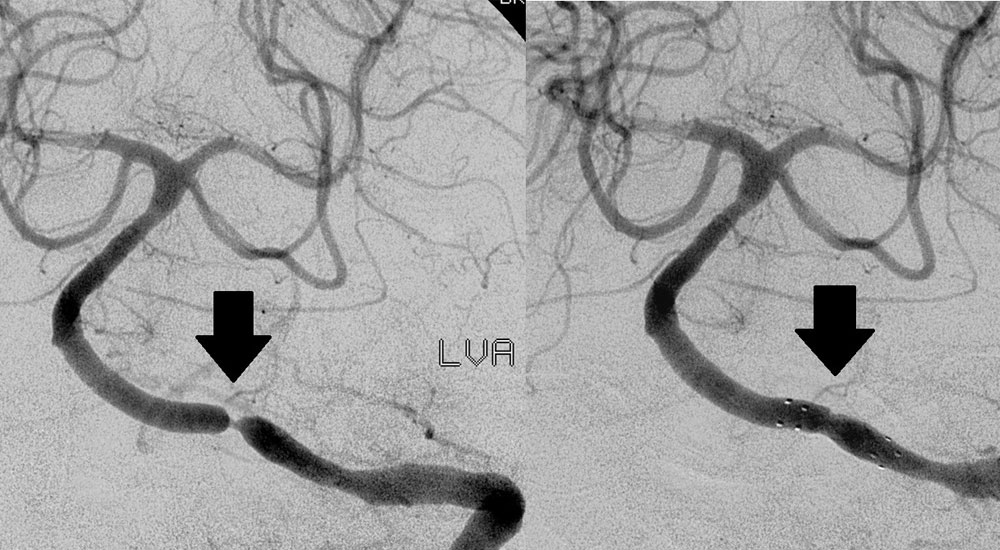
Intracranial atherosclerotic disease (ICAD) is considered a major cause of recurrent cerebrovascular events. ICAD continues to be a disease without an effective method of reducing the risk of recurrent stroke and death, even with aggressive, highly monitored medical treatment. We reviewed data from three randomized controlled studies that published data comparing intracranial stenting vs. medical treatment for symptomatic severe-ICAD. Ethnic, demographic, clinical, and procedural differences were observed among the data from these trials that might influence their results. Future research should aim at establishing refined selection criteria that can identify high-risk ICAD patients who may benefit from intracranial stenting
When used to treat atherosclerosis in either the carotid arteries or intracranial arteries, stents act as a permanent implant that opens these blocked arteries, allowing improved blood to flow to the brain. Angioplasty (a procedure to widen blockages) along with placement of a stent may be an appropriate stroke treatment or stroke prevention option for some people who have had a stroke or transient ischemic attack (TIA). In angioplasty, a balloon catheter (hollow tube) opens the blocked artery to improve blood flow. The stent provides a barrier to reduce the risk of recurrent narrowing of the artery and also supports the artery wall. Sometimes the doctor may use angioplasty to widen the affected area first; in other cases, angioplasty is not used before stent placement.
When a stent is used to treat brain aneurysms, the doctor inserts a catheter into an artery and threads it through the body to the site of the aneurysm. Using a guide wire, detachable coils (spirals of platinum wire) are passed through the catheter and released into the aneurysm. The coils fill the aneurysm, block it from circulation, and cause the blood to clot, which obliterates the aneurysm. The stent is placed to stabilize the artery either before or after the coil placement to serve as a scaffold or barrier to prevent the coils from protruding back into the parent (main) blood vessel.