
Mechanical Thrombectomy Stroke
Mechanical Thrombectomy Stroke
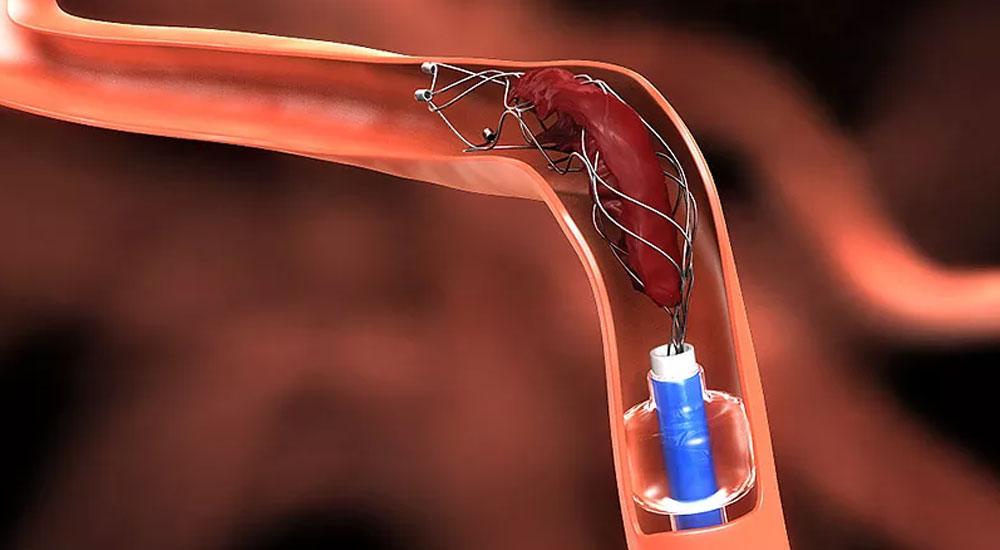
Mechanical thrombectomy is an endovascular technique for removing blood clots from the brain after an ischemic stroke. After making a small incision in the groin, doctors thread thin tubes (catheters) through your blood vessels to the clot. A tiny device at the catheter's tip grabs the clot and removes it, restoring blood flow to the brain.
Mechanical thrombectomy, also known as endovascular therapy, is gentler on your body than surgical thrombectomy. You avoid the larger incisions and disruption to parts of your skull that are necessary with a surgical procedure.
Thrombectomy is a mechanical interventional procedure by which a blood clot or thrombus is removed under image guidance using endovascular devices. Thrombectomy is most commonly used in acute cerebral ischemic stroke, although it is also a procedure used for clot removal in acute myocardial infarction (MI) and pulmonary embolism (PE). Mechanical thrombectomy utilizes various techniques. Most commonly, it uses different catheter-based therapies, including stent-retrieval, direct aspiration, or a combination of both.